
Most nursing school essentials cost less than you’d think. Outside of a stethoscope and a blood pressure cuff, the whole kit is a pair of trauma shears, a penlight, a watch with a second hand, decent compression socks and a few small things. For most of them, Prestige Medical makes a solid student-priced version.
Before you buy anything, check your program’s list first. Every nursing program publishes its own required supply list. Many specify a scrub color, some want a certain stethoscope, and a few sell a ready-made kit through the bookstore. Use this list to fill the gaps and pick better versions of what’s on theirs.
Here’s the whole list, in roughly the order you’ll need each thing.
- Stethoscope. See our full stethoscope guide.
- Blood pressure cuff. See our full blood pressure cuff guide.
- Trauma shears. Prestige Medical 7.5” EMT Utility Scissor.
- Penlight. Prestige Medical Soft LED Pupil Gauge Penlight.
- Nurse watch. Prestige Medical Analog Stethoscope Watch.
- Compression socks. Prestige Soft Comfort Compression Socks.
- Pocket reference. RNotes Nurse’s Clinical Pocket Guide.
- Drug guide. See our nursing books guide.
- Gait belt. Prestige Medical Nylon Gait Transfer Belt.
- Clinical bag. Prestige Medical Nurse Car-Go Bag.
- Badge reel. Prestige Medical Retracteze ID Holder.
- Scrubs and shoes. Follow your program’s dress code.
The Whole List at a Glance
| Item | Our pick | Cheaper or other option | When you need it |
|---|---|---|---|
| Stethoscope | See our guide | Kits with a BP cuff | First skills lab |
| Blood pressure cuff | See our guide | Cuff and stethoscope kit | First skills lab |
| Trauma shears | Prestige EMT Utility Scissor | – | Skills lab |
| Penlight | Prestige Soft LED Pupil Gauge | Prestige disposable penlight | Health assessment |
| Nurse watch | Prestige Stethoscope Watch | Prestige Student Scrub Watch | First skills lab |
| Compression socks | Prestige Soft Comfort socks | – | Before clinicals |
| Pocket reference | RNotes | Free report sheets | Before clinicals |
| Drug guide | See our books guide | Your program’s app | Pharm and clinicals |
| Gait belt | Prestige Nylon Gait Belt | Cotton version | Fundamentals |
| Clinical bag | Prestige Nurse Car-Go Bag | Any small bag you own | Before clinicals |
| Badge reel | Prestige Retracteze | Lanyard | Before clinicals |
What Actually Matters When You Shop
A few things decide whether a supply is a good buy for nursing school.
It has to be cleanable. Everything you carry onto a unit gets wiped down. Metal, hard plastic and nylon are easy. Fabric watch bands and cute felt accessories aren’t.
It has to be allowed. Programs and hospitals have rules about jewelry, watches, phones, nail length and scrub color. A smartwatch that’s fine in lecture might not be allowed on the floor. Read your dress code before you buy anything you’ll wear.
Cheap is fine for most of it. You’ll lose a penlight. Someone will walk off with your shears. Spend money on the stethoscope and your shoes. Go cheap on the small stuff.
Pockets fill up fast. Shears, a penlight, a pen, a pocket guide, alcohol pads and a report sheet add up. Pick small versions where you can.
1. Stethoscope
This is the one supply worth real money. You’ll use it on day one of skills lab and every shift after that. Many programs list a dual-head stethoscope by name, and plenty of students buy a Littmann.
We’ve covered this in depth, so we won’t repeat it here. Read our guide to the best stethoscopes for nursing students for picks at every price.
2. Blood Pressure Cuff
You’ll practice manual blood pressures from the first weeks of school, and you’ll get checked off on them before clinicals. That means you want your own manual aneroid cuff, not an automatic home monitor.
Our guide to the best blood pressure cuffs for nursing students covers standalone cuffs and kits that come with a stethoscope.
3. Trauma Shears (Bandage Scissors)
Trauma shears are the bent scissors every nurse seems to have in a pocket. People call them bandage scissors, EMT shears or utility scissors. You’ll cut tape, gauze, dressings and tubing packaging with them. The blunt, angled tip lets you slide under a dressing without nicking skin.
Many programs put a pair on the supply list. A basic pair is all you need.
Prestige Medical 7.5” EMT Utility Scissor
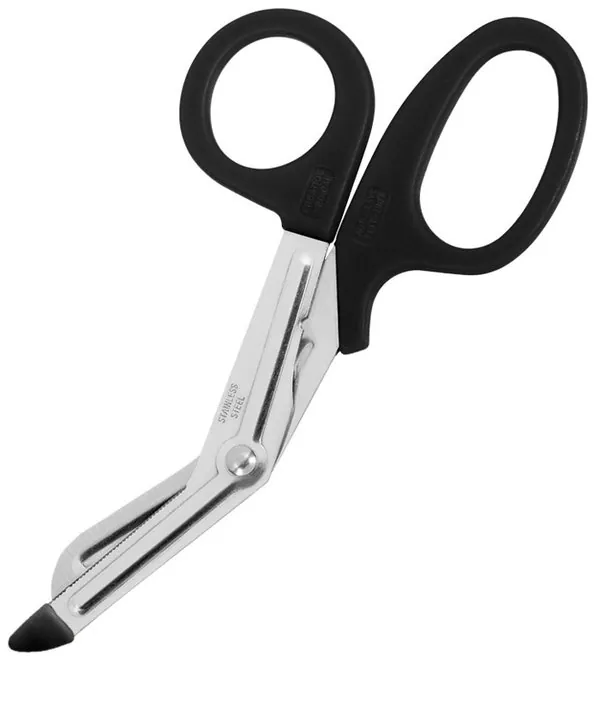
This is the classic pair. It costs about what a lunch does, and it does the job.
Prestige makes the blades from Japanese 420 stainless steel. The serrations are milled, not stamped, which Prestige says helps them cut through tough clothing and bandages. They can go in an autoclave, so a clinical site can sterilize them if it needs to.
It comes in black, purple, royal and teal. A bright color helps when three students set theirs down on the same counter.
Who it’s for. Pretty much every nursing student.
The downside. It’s a basic tool. No extras, no holster, and it won’t fold to fit a small pocket.
| Spec | Detail |
|---|---|
| Length | 7.5 in |
| Blades | Japanese 420 stainless steel, milled serrations |
| Sterilizing | Autoclavable to 143°C / 290°F |
| Colors | Black, purple, royal, teal |
4. Penlight with a Pupil Gauge
You’ll use a penlight in health assessment to check pupils and look in the mouth. Get one with a pupil gauge printed on the side. That’s the row of dots in millimeter sizes you hold next to the eye to size the pupil.
Prestige Medical Soft LED Pupil Gauge Penlight
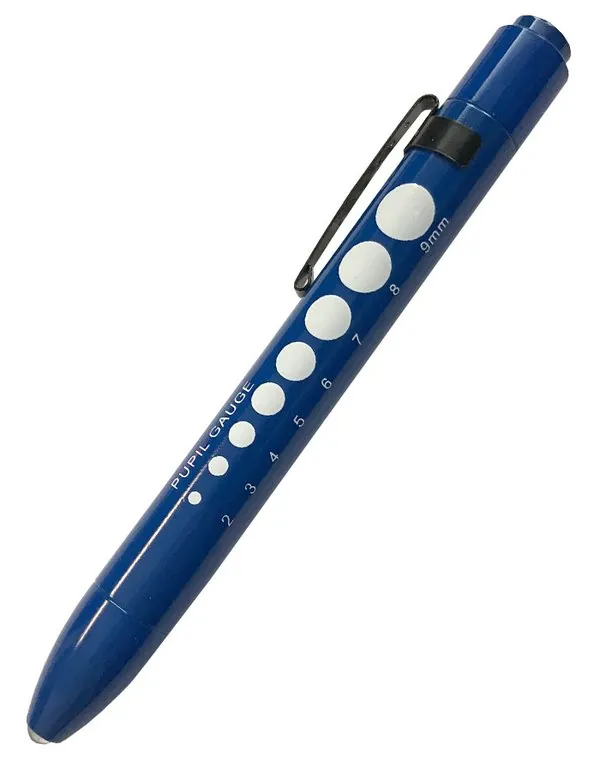
This is a reusable metal penlight with a soft LED. It turns on with a push button, not by pressing the clip. The pupil gauge is printed right on the side, and a pocket clip keeps it handy.
It runs on one AAA battery, and Prestige includes it. When the battery dies, you swap it instead of tossing the light.
It comes in a long list of colors, from black and silver to hot pink and aqua.
Who it’s for. Anyone who wants one penlight that lasts the whole program.
The downside. It costs a few dollars more than a disposable one. And penlights walk off. Write your name on it.
| Spec | Detail |
|---|---|
| Light | Soft LED |
| Switch | Push button |
| Body | Metal, with pocket clip |
| Battery | One AAA, included |
| Pupil gauge | Printed on the side |
The cheaper option. The Prestige Medical Pupil Gauge Disposable Penlight is a plastic version with a soft LED and the same printed pupil gauge. It turns on by pressing the clip. It’s cheap enough that losing one doesn’t sting, and a lot of students keep a spare in their bag.
5. A Nurse Watch with a Second Hand
You need to count a pulse and respirations for 30 or 60 seconds. That means a watch with a second hand you can read at a glance. A phone doesn’t cut it, because many programs ban phones on the unit.
Think about infection control too. Some hospitals ask staff to keep their wrists bare so they can wash up to the elbow. A watch that clips on, pins on or hangs from your scrubs gets around that. That’s why fob watches and clip watches are so popular with nurses.
Prestige Medical Analog Stethoscope Watch
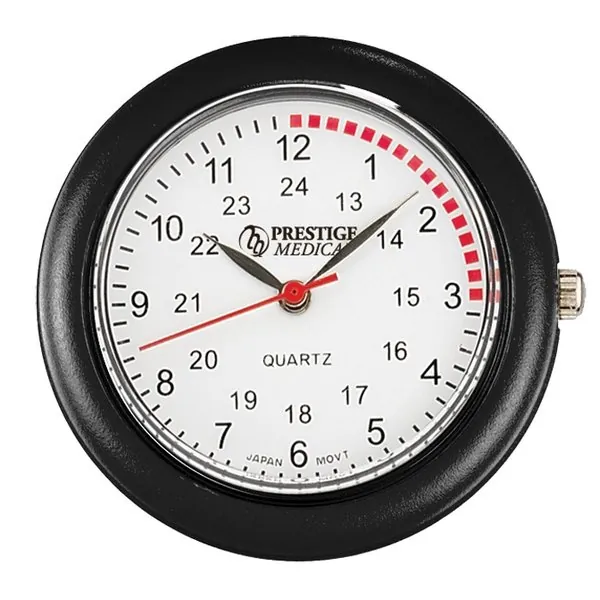
This watch clips onto your stethoscope tubing. Your wrists stay bare, and the watch is right there when you’re listening to a heart or counting breaths.
The face has 24-hour markings, which helps when charting in military time. The 15-second quadrant is marked in red, so you can count for 15 seconds and multiply by four when your instructor allows it. It has a quartz movement and a water-resistant case.
Who it’s for. Students whose clinical sites want bare wrists, or anyone who’d rather not wear a watch.
The downside. It goes where your stethoscope goes. If your stethoscope is in your bag, so is your watch.
| Spec | Detail |
|---|---|
| Wear | Clips onto stethoscope tubing |
| Dial | 24-hour markings, marked 15-second quadrant |
| Second hand | Step second hand |
| Movement | Quartz |
| Case | Water resistant |
The wrist option. If your program is fine with wristwatches, the Prestige Medical Student Scrub Watch is a cheap, easy-to-wipe plastic watch. It has a 24-hour dial, a step second hand, a quartz movement and water resistance, and it comes with its battery.
6. Compression Socks for Nurses
Twelve-hour clinical days are hard on your legs. Compression socks squeeze tightest at the ankle and ease off up the calf, which helps blood move back up instead of pooling in your feet. A lot of nurses swear by them, and they’re near the top of most nursing school essentials lists.
Most people start at 15–20 mmHg. That’s moderate compression. Firmer 20–30 mmHg socks are for people who need more, and it’s worth asking a doctor before you go that high.
Prestige Medical 12” Soft Comfort Compression Socks
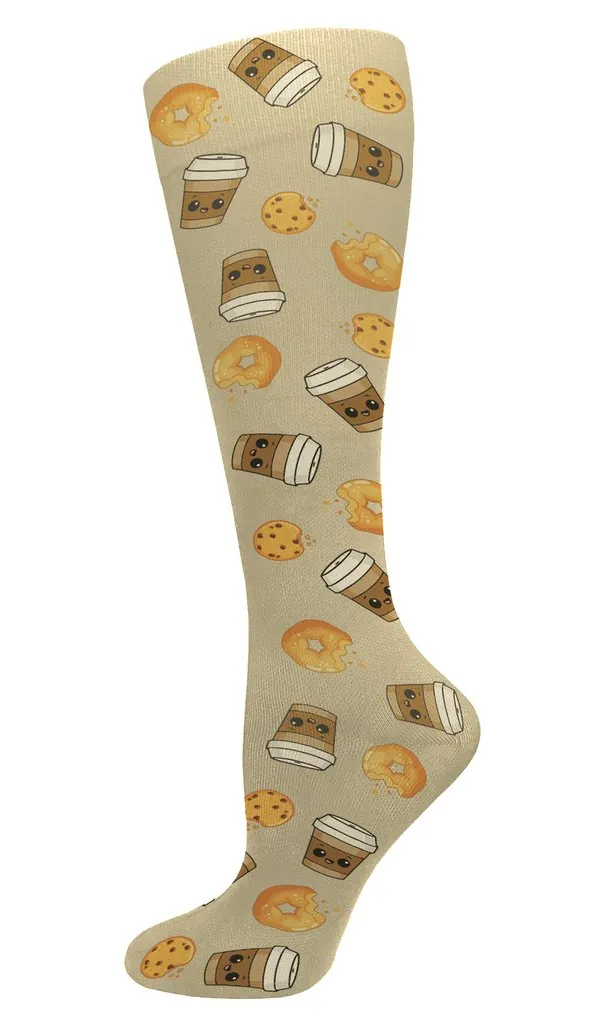
These are cheap, they come in fun prints, and they give you the 15–20 mmHg most people start with. Prestige makes them from polyester, nylon and spandex.
Who it’s for. Students who want a few pairs to rotate through clinical weeks without spending much.
The downside. Fit. Prestige lists them for women’s shoe sizes 5–9 and men’s 4–8, so bigger feet need to look elsewhere. Wool and bamboo blends from brands like Sockwell cost more but are worth a look if you run hot or need bigger sizes.
| Spec | Detail |
|---|---|
| Compression | 15–20 mmHg |
| Material | Polyester, nylon, spandex |
| Length | 12 inches |
| Fits | Women’s 5–9, men’s 4–8 |
7. A Clinical Notebook or Pocket Reference
At clinicals you’ll keep notes on your patient all shift. Vitals, meds, labs, what changed. Most students use a printed report sheet, sometimes called a brain sheet. Your program may hand you one. If not, there are plenty of free templates online. Fold it in half and it fits in a scrub pocket.
A pocket reference is the other half. It’s for the moment you blank on a normal lab range or a pain scale.
RNotes Nurse’s Clinical Pocket Guide
RNotes by Ehren Myers, from F.A. Davis, has been a nursing student staple for years. It’s a small pocket guide that puts the things you look up most in one place.
Who it’s for. Students who want a quick reference in their pocket instead of on a phone they might not be allowed to use.
The downside. It’s one more thing in your pocket. And if your program already gives you a reference app, you may not need it.
| Spec | Detail |
|---|---|
| Author | Ehren Myers |
| Publisher | F.A. Davis |
8. A Drug Guide
You’ll look up every med you give at clinicals. Your instructor will quiz you on class, action, side effects and nursing considerations before you give it. A nursing drug guide is built for exactly that.
Some programs provide a drug app. If yours doesn’t, our list of the best books for nursing students covers Davis’s Drug Guide, Mosby’s and a smaller pocket option.
9. Gait Belt
A gait belt goes around a patient’s waist so you can steady them while they walk or move from bed to chair. You’ll learn to use one in fundamentals, and many programs require you to bring your own to clinicals.
Prestige Medical Nylon Gait Transfer Belt (Metal Buckle)
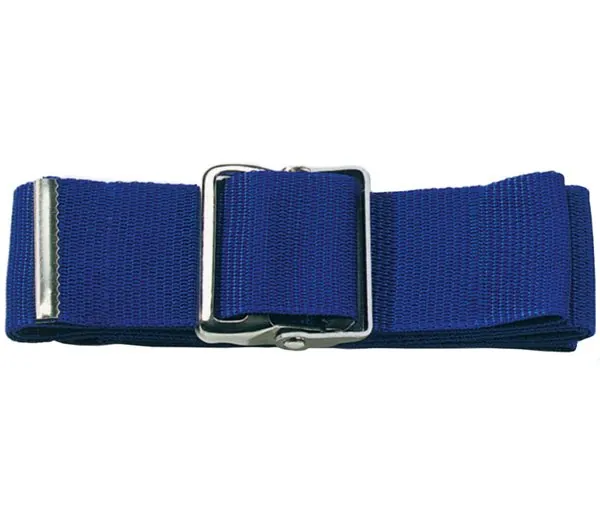
This is a simple 58-inch belt made of heavy-duty nylon with a metal buckle. Nylon is easier to wipe down than cotton, which is why we’d pick it over Prestige’s cotton version. It comes in black, hot pink, purple and royal.
Who it’s for. Students whose program lists a gait belt.
The downside. At 58 inches, it may come up short on larger patients. Units usually keep longer belts on hand for that.
| Spec | Detail |
|---|---|
| Length | 58 in |
| Material | Heavy-duty nylon |
| Buckle | Metal |
| Colors | Black, hot pink, purple, royal |
10. A Clinical Bag
You need something to carry your stethoscope, cuff, penlight, snacks and paperwork to clinicals. Keep it small. Many sites don’t have much space for students, and a giant backpack will end up on the floor.
Prestige Medical Nurse Car-Go Bag
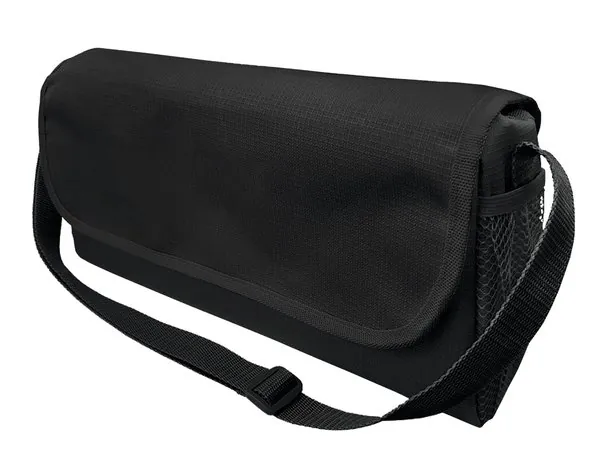
Prestige designed this bag for home care nurses who work out of their cars, but it suits students too. It has a removable compartment sized for a blood pressure cuff, a travel mug holder, a front mesh pouch and a phone pouch. Inside there are several more compartments. A hook-and-loop strip on the bottom keeps it from sliding around on a car seat.
At 13 x 6 x 4 inches, it holds the gear without turning into a suitcase.
Who it’s for. Students who drive to clinical sites and want their kit organized.
The downside. It only comes in black. And if you already own a small bag with a few pockets, that works just as well.
| Spec | Detail |
|---|---|
| Size | 13 x 6 x 4 in |
| Pockets | Removable BP cuff compartment, mug holder, mesh pouch, phone pouch |
| Extra | Hook-and-loop strip holds it on car seats |
| Color | Black |
11. Badge Reel
Your student ID has to be visible at clinicals, usually above the waist. A retractable badge reel lets you scan into doors and pull the badge up for a staff member without unclipping it. Lanyards are the other option, but some units discourage them because they dangle over patients.
Prestige Medical Retracteze ID Holder
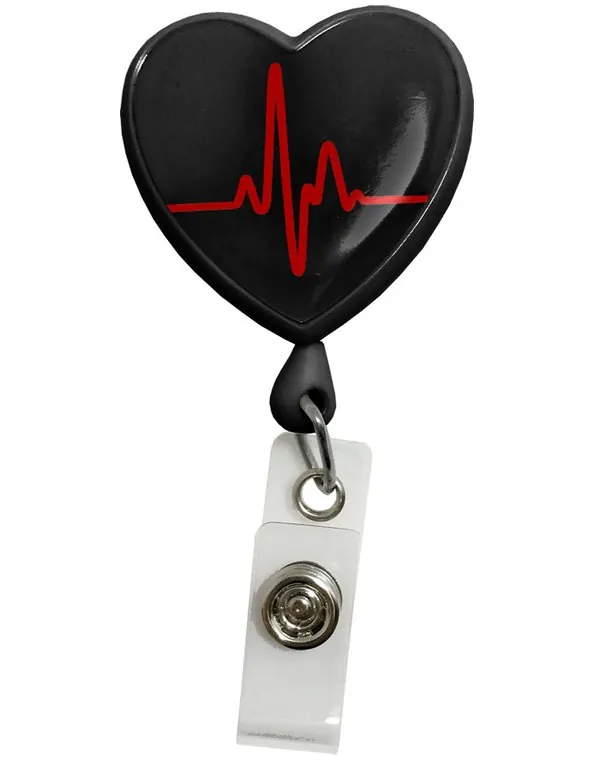
This badge reel has a 23-inch retractable nylon cord and a standard metal clip for your scrub top. It can hold keys too. The EKG heart design is one of dozens Prestige makes, from plain colors to nursing prints.
Who it’s for. Every student going to clinicals.
The downside. Some programs want a plain badge holder with no prints. Check before you buy a fun one.
| Spec | Detail |
|---|---|
| Cord | 23 in retractable nylon |
| Clip | Standard metal clip |
| Holds | Badge, ID or keys |
12. Scrubs and Shoes
Scrubs are the one thing you shouldn’t buy early. Most programs specify an exact color, and many require a school logo or patch. Some want a specific brand bought through the bookstore. Wait for the dress code, then buy two or three sets so you’re not doing laundry every night.
Shoes matter more than almost anything else on this list. You’ll stand and walk for 12 hours. Most programs want closed-toe, closed-heel shoes that are easy to wipe clean, and some want them all white or all black. Brands like Nurse Mates make shoes built for this. Our guide to the best shoes for nurses compares five pairs that work for clinicals.
What to Buy First
Don’t buy everything at once. Start with what you’ll use in your first skills lab.
- A stethoscope and blood pressure cuff.
- A penlight and a watch with a second hand.
- Trauma shears and a gait belt if your program lists one.
- Compression socks, a bag, a badge reel and a pocket reference before clinicals.
- Scrubs and shoes once you know the dress code.
Keep the receipts and cross things off your program’s list as you go. And if you’re still choosing a program, look at our list of accelerated nursing programs without prerequisites and compare schools by their NCLEX pass rates.